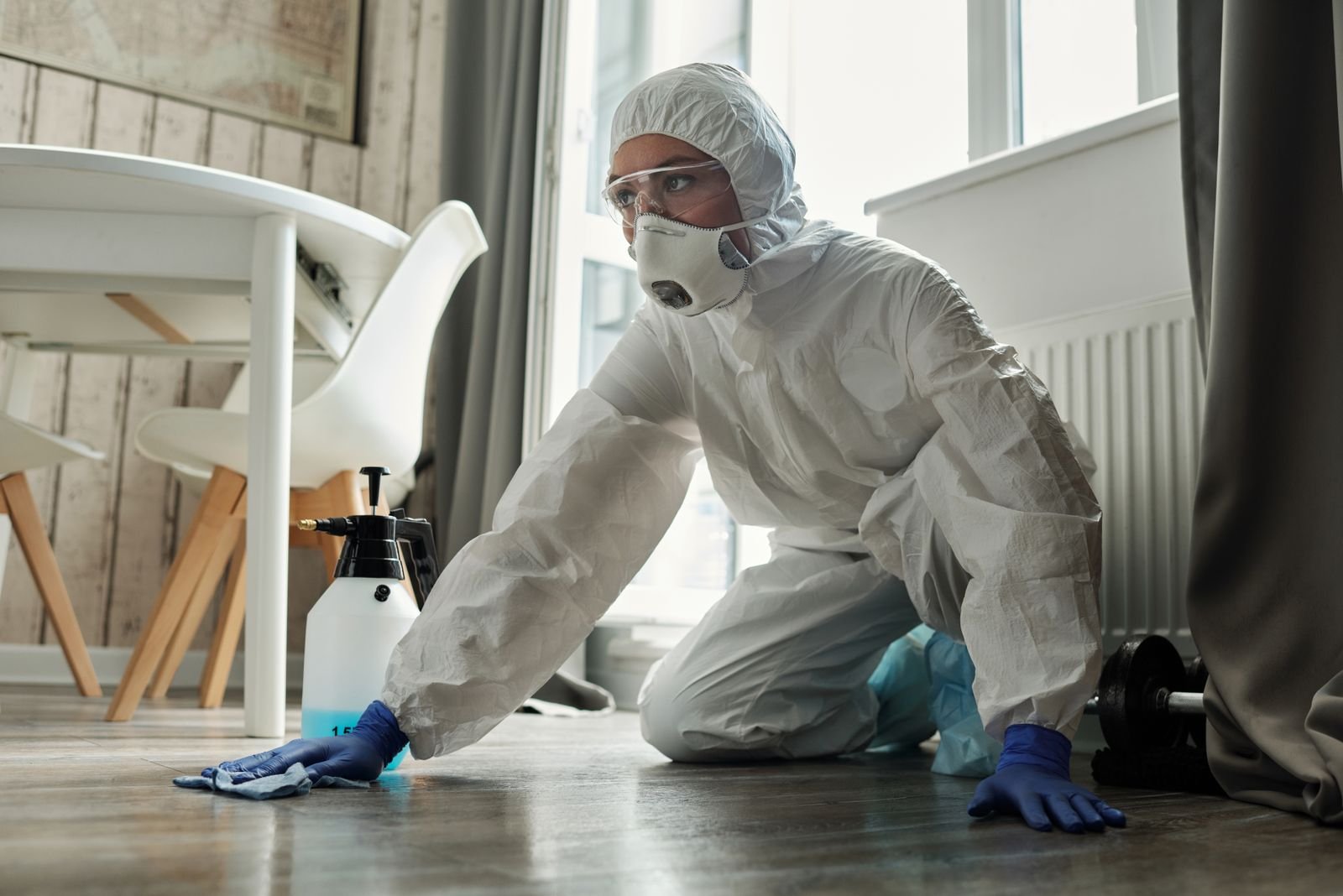
Post-Remediation Clearance Testing in Missouri City, TX — Proof the Job Passed
Clearance testing is the final, independent check that confirms a mold remediation actually succeeded — a definitive pass or fail before the containment comes down. It's your proof for an insurer, a buyer, or your own peace of mind that the air is clean. Serving all of 77459 and 77489.
What Post-Remediation Clearance Testing Is — and Where It Fits
Post-remediation clearance testing — sometimes called post-remediation verification, or PRV — is the independent check that confirms a mold remediation job actually worked. After the mold has been removed, the surfaces cleaned, and the structure dried, clearance testing answers the one question that matters before anyone declares the job finished: is the space genuinely clean, or does it just look clean? It produces a definitive pass or fail, and that verdict is what allows the containment to come down with confidence.
It's the last step of a proper remediation for a reason. Under the IICRC S520 standard — the recognized standard of care for the industry — verification is built into the process, not treated as an optional add-on. Removing the mold is the work; proving it's gone is what closes the loop. Without that proof, you're trusting that the job was done right based on appearances alone, and mold's whole problem is that it thrives where you can't see it. Clearance testing replaces that assumption with measured evidence, which is exactly why it's the final stage of every job in our full mold services and the broader mold remediation Missouri City framework.
What a Clearance Test Actually Includes
A clearance test is more than a single air sample. A thorough verification looks at the space from several angles, because mold can be addressed in the air while still lingering on a surface, or vice versa. The check generally has three parts working together.
- A visual inspection. The space is examined for any remaining visible mold, dust, or debris — a clearance can't pass if there's still obvious growth or residue, regardless of what the air reads.
- Moisture readings. The structure is checked with moisture meters to confirm it has been dried back to a normal moisture content, because residual dampness is what lets a colony return after the crew leaves.
- Air and surface sampling. Samples are collected and sent to an accredited lab for analysis, comparing the types and quantities of spores inside the remediated area against an outdoor baseline taken the same day.
That outdoor baseline matters more than people expect. There is mold in the outdoor air everywhere — it's normal — so the goal of remediation isn't a sterile, mold-free room, which is impossible. The goal is an indoor environment that matches or beats the normal outdoor condition. Sampling against a same-day outdoor baseline is the only fair way to judge that, and it's a core reason clearance is best handled with proper lab analysis rather than a quick visual once-over.
Ask How Clearance Works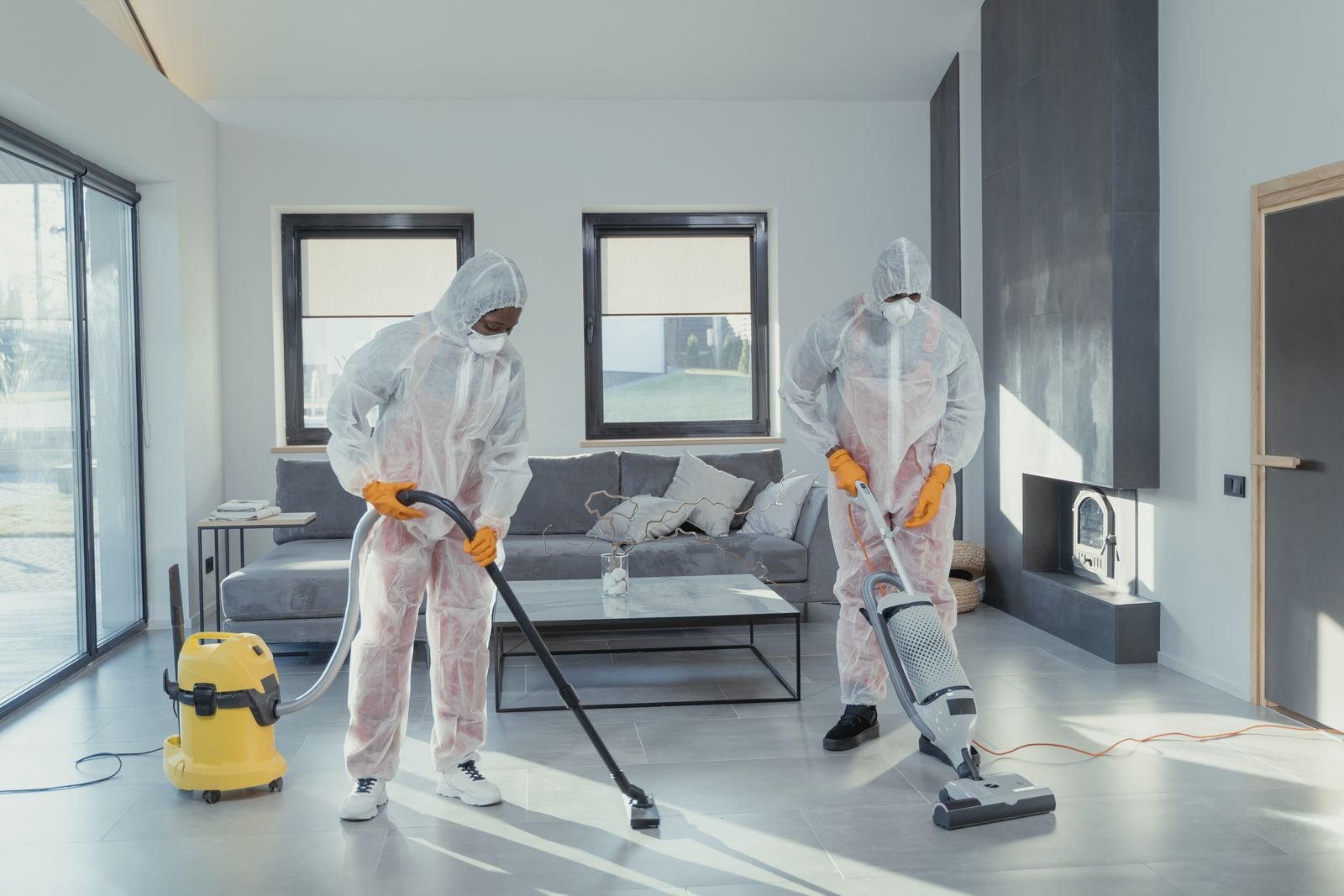
What a Passing Clearance Test Looks Like
A clearance test passes when the indoor environment is back to normal relative to the outdoors. Concretely, that means the types of mold spores found inside the remediated area, and the quantities of them, are similar to or lower than what's in the outdoor baseline sample collected the same day. If the inside looks like the outside — or cleaner — the remediation did its job, and there should be no visible mold and no signs of lingering moisture to undercut that result.
A fail is the opposite picture. When the indoor sample shows spore counts that are elevated compared to the outdoor baseline — or shows a concentration of the kinds of spores associated with active indoor growth — the remediation is incomplete. Something was missed: a pocket of mold that wasn't found, a surface that wasn't fully cleaned, or moisture that wasn't fully dried. A failed clearance isn't a disaster; it's the system working exactly as intended. The entire reason to test is to catch an incomplete job before the walls close up and the problem reappears months later. It's far cheaper and far less disruptive to re-clean a contained area now than to discover the same mold after the room is finished and furnished. Clearance testing is also distinct from the initial mold testing that may have confirmed the problem at the start — that earlier test established that mold was present; clearance confirms it's gone.
What Happens If the Clearance Test Fails
If a clearance test fails, the practical answer is straightforward: the area gets re-cleaned and re-tested. A failure tells the crew that something in the remediation was incomplete — usually a missed pocket of growth, a surface that needs more attention, or residual moisture that has to be driven out. The remediation reopens, the problem area is addressed, and a fresh clearance is run to confirm the second pass succeeded. The containment stays up until that retest comes back clean, which is the entire point of not taking it down prematurely.
Reputable remediation treats a failed clearance as part of doing the job right, not as an extra you're billed for. When the failure points to incomplete remediation, the re-cleaning is generally handled at no additional charge, because the job simply wasn't finished. That accountability is one of the strongest arguments for insisting on clearance in the first place — it ties the contractor to a measured result rather than a promise. A company confident in its work has no reason to fear the test, and a company that resists clearance or wants to skip it is telling you something about how confident it really is.
Who Should Do Clearance Testing — the Texas Licensing Rule
The credibility of a clearance test depends on its independence, and Texas builds that independence into the law. Mold work in the state is regulated by the Texas Department of Licensing and Regulation, which separates two roles deliberately. A Mold Remediation Contractor (MRC) performs the remediation itself. A separate Mold Assessment Consultant (MAC) handles the assessment and the final clearance verification. For any project larger than 25 square feet, that separation is required — the company that did the work is not the one that grades its own homework.
The reasoning is simple and protects the homeowner: a contractor verifying its own remediation has an obvious conflict of interest, because a passing result is in its own financial interest. An independent assessor has no stake in the outcome other than reporting it accurately. We work within that framework on every job that calls for it, coordinating with accredited labs and an independent assessor so the clearance you receive is genuinely independent and stands up to an insurer or a future buyer. A clearance test from the same crew that did the removal, with no independent check on a large job, isn't worth much — and Texas law recognizes that. This verification is best paired with a thorough mold inspection at the front of the job, so the start and end of the work are both grounded in measured evidence.
Why the Documentation Is Worth Having
Beyond confirming the air is clean, a clearance report is a document with real-world value. For an insurance claim, it's the proof that the remediation was completed to standard, which is often what releases the final payment or closes the file. For a real-estate transaction, it answers the disclosure question every buyer asks — was the mold properly dealt with? — with measured evidence instead of a verbal assurance, and it can be the difference between a smooth sale and a renegotiation. And for your own peace of mind, it's the difference between hoping the job worked and knowing it did. Do you really need clearance after remediation? On any job of meaningful size, the answer is yes: it's the evidence that turns “we cleaned it” into something you can prove. Call (713) 325-6192 to talk through clearance for your situation.
Clearance Testing Questions, Answered
A few common questions from Missouri City homeowners — answered straight.
Finishing a Remediation? Get It Verified.
We coordinate independent clearance — visual inspection, moisture readings, and accredited-lab sampling — with a written pass/fail report for your insurer or buyer. Tell us about your Missouri City home.
(713) 325-6192Clearance Testing Across Missouri City
Whether a remediation followed a leak, a flood, or a long-standing humidity problem, the homeowners and buyers we work with across Missouri City increasingly want measured proof that the job worked — not just a handshake. Insurers want it for claims, buyers want it for disclosures, and in a humid climate where mold is a recurring concern, a clean clearance report is genuine peace of mind. We build clearance into our jobs as the IICRC S520 final step and coordinate the independent verification that Texas requires on larger projects, on every job in 77459 and 77489.
Make Sure the Mold Job Really Passed.
Independent clearance verification with a written pass/fail report — the proof an insurer or buyer will want. Talk to a certified specialist now about a free phone estimate.
(713) 325-6192Call for a Free Estimate