Get Mold Remediation Near Community Park
Visible mold, a musty smell, or mold after a leak in a home bordering Missouri City's 107-acre Community Park off Cartwright Rd? We respond fast, scope it on-site, and remediate it the right way — contained, HEPA-cleaned, dried, and verified. Free estimate for park-adjacent homes across 77489.
The Mold Problems We Fix in Homes Near Community Park
At 107 acres, Community Park is the largest single greenspace in central Missouri City — big enough to hold multiple ballfields, walking trails, and a large detention footprint, which makes its drainage engineering more aggressive than a typical neighborhood pocket park. The central, Quail-Valley-side streets off Cartwright Rd in 77489 that ring it face a mold profile shaped by that scale. The leading cause on these lots is low-lying drainage and detention near the park: a facility this size is built to capture stormwater from a wide radius, not just its own footprint, so the bordering lots often sit at the low end of a drainage path serving several surrounding streets at once. Soil around foundations stays saturated longer after a downpour, water lingers near the slab or crawl space, and that standing dampness is precisely the fuel mold needs.
From there, the moisture works its way into the homes. On the mix of slab and crawl-space construction common across central Missouri City, crawl-space mold is a routine call — damp ground and still air let mold settle into the floor joists and subfloor, and the rising stack effect carries the musty odor up into the living areas. On slab-built homes, that same ground moisture pushes in low on the walls and collects behind baseboards where it goes unseen for months. Because Community Park draws foot traffic and ballfield use from Quail Valley, Hunters Glen, and the neighborhoods further down Cartwright Rd, we see this drainage-driven pattern repeat across a wider ring of streets than a smaller park would generate.
Inside and overhead, the familiar residential trouble spots fill out the picture. Attics trap hot, humid Gulf Coast air against the roof decking, and weak ventilation or a roof leak turns it into condensation and mold across the sheathing and rafters. Poorly ventilated master baths hold shower steam that lingers, growing mold on ceilings, around tubs, and at exhaust grilles. The mature trees that shade these park-side streets also keep siding damp well after rain. Whatever you are seeing near the park, our water-damage mold remediation approach finds and resolves the moisture first, because nothing lasts until the water is fixed.
What Happens When We Come to the Community Park Area
A controlled, IICRC S520 sequence that protects the rest of your home while the mold comes out.
- Inspect and find the source. We map the affected area with moisture meters and thermal imaging and trace the mold back to the drainage, the crawl-space damp, or the leak feeding it — because nothing else holds until the water is fixed.
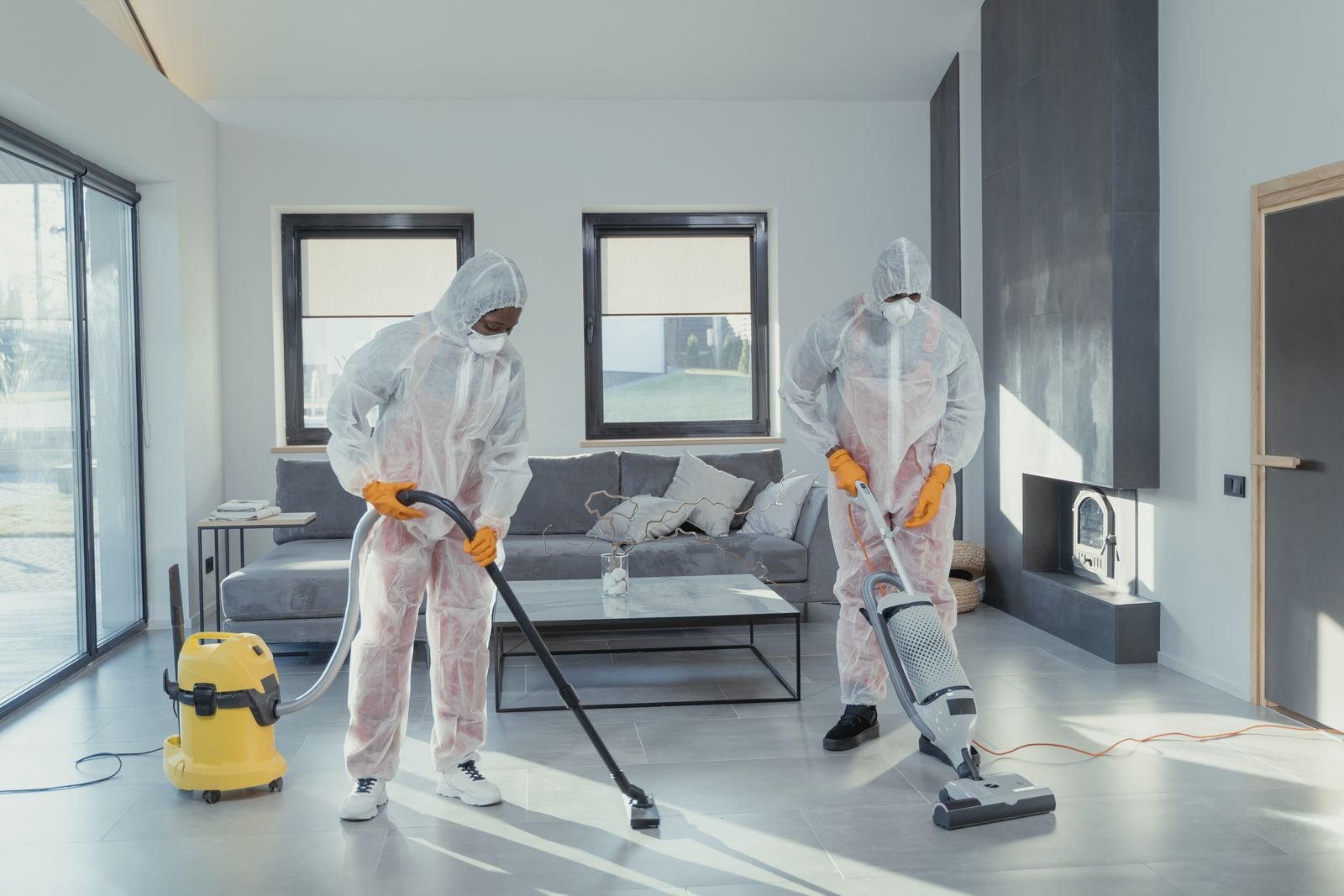
- Contain the work area. We seal the space with 6-mil polyethylene sheeting and run a negative-air machine at -5 to -10 pascals, with HEPA filtration capturing 99.97% of particles down to 0.3 microns, so spores flow into the containment and never into your clean rooms.
- Remove the contaminated material. Colonized porous materials — drywall, insulation, carpet pad — are cut out and bagged inside the containment. Non-porous surfaces that can be saved stay in place.
- HEPA-clean and treat. Every surface is HEPA-vacuumed and wiped with an antimicrobial, and the air itself is scrubbed before anything is closed up.
- Dry the structure. We dry the framing and remaining materials back to a normal moisture content, because residual dampness is an open invitation for the colony to return.
- Verify and clear. On a job over 25 square feet, an independent TDLR Mold Assessment Consultant confirms the result with third-party clearance before the containment comes down.
What Mold Remediation Costs Near Community Park — and Why the Estimate Is Free
Most homeowners near the park want a number first, so here is the honest range. Mold remediation in Missouri City typically runs about $10 to $30 per square foot, and most local residential jobs land between roughly $1,500 and $6,000. A mold inspection on its own generally falls between $300 and $1,075. Black mold and jobs that need heavy containment or crawl-space access sit at the higher end. We give a free estimate before quoting because the real price depends on a few things:
- How much area is affected — a contained bathroom wall is very different from mold across a crawl space or a whole floor.
- Where it is — a tight crawl space under a park-adjacent home is slower to reach than an open wall.
- The mold type — black mold needs stricter containment and protective equipment, which adds cost.

Why Properties Near Community Park Get Mold
It starts with the air. Fort Bend County averages around 74% outdoor humidity for much of the year, so moisture is almost always available for mold to use. Keep indoor relative humidity between 30 and 50% and growth stays in check; let it climb above 60% and mold takes hold. And once water intrudes, mold growth begins within 24 to 48 hours — meaning a slow leak or a wet crawl space that sits for a weekend can seed a colony before anyone notices.
The park's scale magnifies that baseline for the homes around it. A 107-acre facility with multiple fields and a large detention system is engineered to absorb and hold stormwater from well beyond its own boundary, and the bordering lots tend to sit where that wider drainage network collects — a different, larger-radius effect than you'd see backing onto a small neighborhood green. That keeps the soil around foundations and crawl spaces wetter than a typical inland property for longer after every storm. The deep canopy of mature trees that shades these central streets also keeps siding and crawl spaces from drying between rains. Stack year-round humidity, that broad drainage footprint, and heavy shade together and you get a part of Missouri City where mold recurs unless the moisture is genuinely addressed — which is exactly why we treat every job near the park as a moisture problem first.
The Streets We Serve Around Community Park
We cover the park-adjacent homes in the Cartwright Rd area on the central, Quail-Valley side of 77489, near Community Park's 107 acres of greenspace. If you are anywhere bordering the park in the wider Quail Valley area, we come to you. For background on the park itself, see our Community Park page, or start from mold remediation Missouri City.
Confirm Coverage — Call NowFrequently Asked Questions
Common questions from homeowners near Community Park — answered straight.
Mold in a Home Near Community Park?
We contain it, remove the source, HEPA-clean the air, dry the structure, and verify the result — with a free estimate and clearance documentation. Tell us about your park-adjacent home in 77489.
(713) 325-6192Mold Near the Park? Let's Fix It Right.
Certified, IICRC S520 remediation for park-adjacent homes near Community Park — free estimate, fast local response, clearance documentation. Talk to a specialist now.
(713) 325-6192Call for a Free Estimate